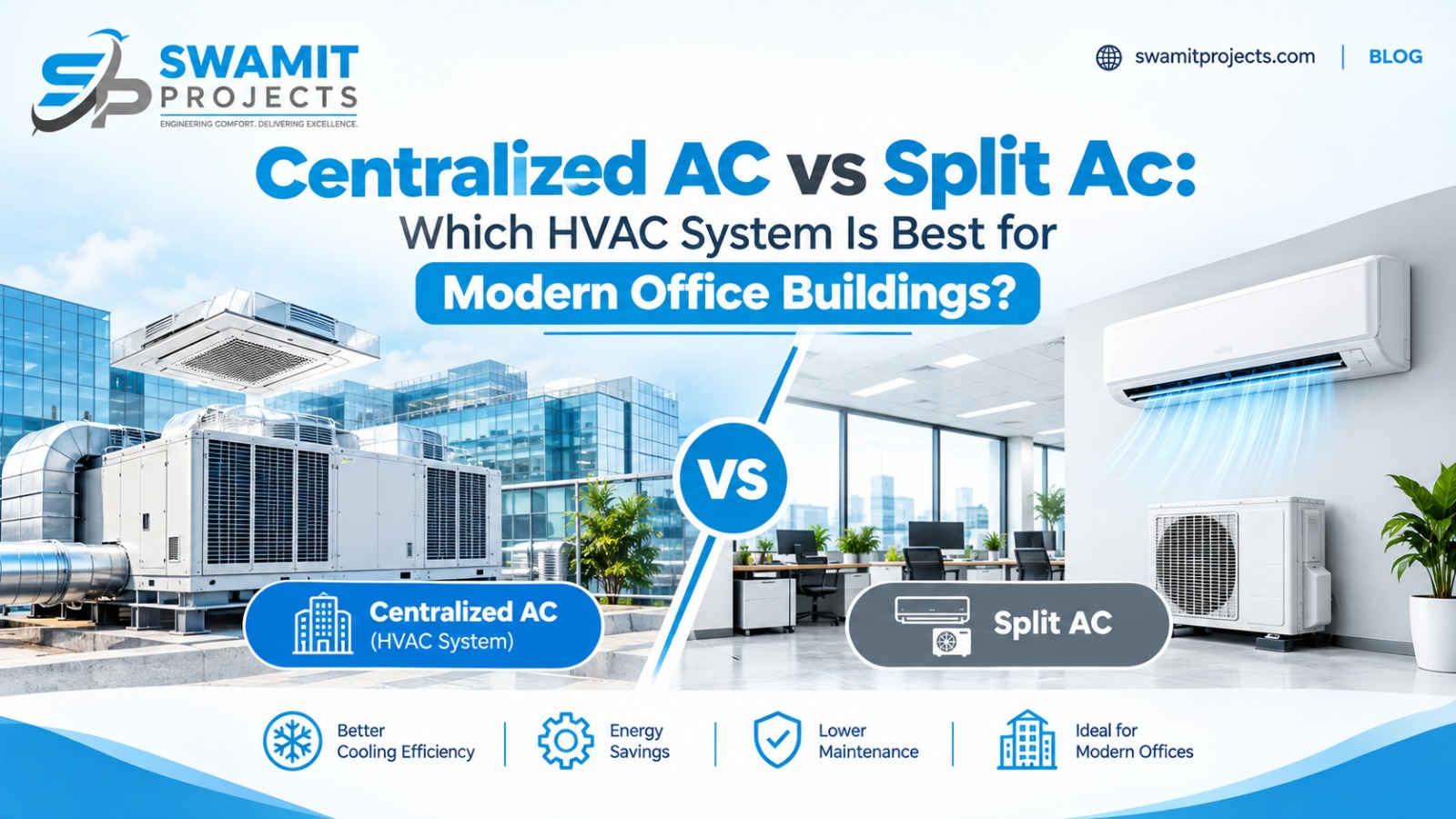
Centralized AC vs. Split AC: Which HVAC System Actually Works for Modern Offices?
Walk into any newly fitted office, and you’ll notice two things right away: the interior design and the temperature. If people are wearing winter jackets at their desks or fighting over the thermostat remote in a glass conference room, the HVAC planning missed the mark.
When designing or renovating a commercial workspace, one of the biggest calls you have to make comes down to centralized systems versus split AC units. Both cool air, but they operate completely differently when it comes to power bills, ceiling aesthetics, maintenance, and long-term operating costs.
Here is a practical, ground-level comparison to help you choose the right setup for your office floor plan.
1. How Split ACs Perform in Office Environments
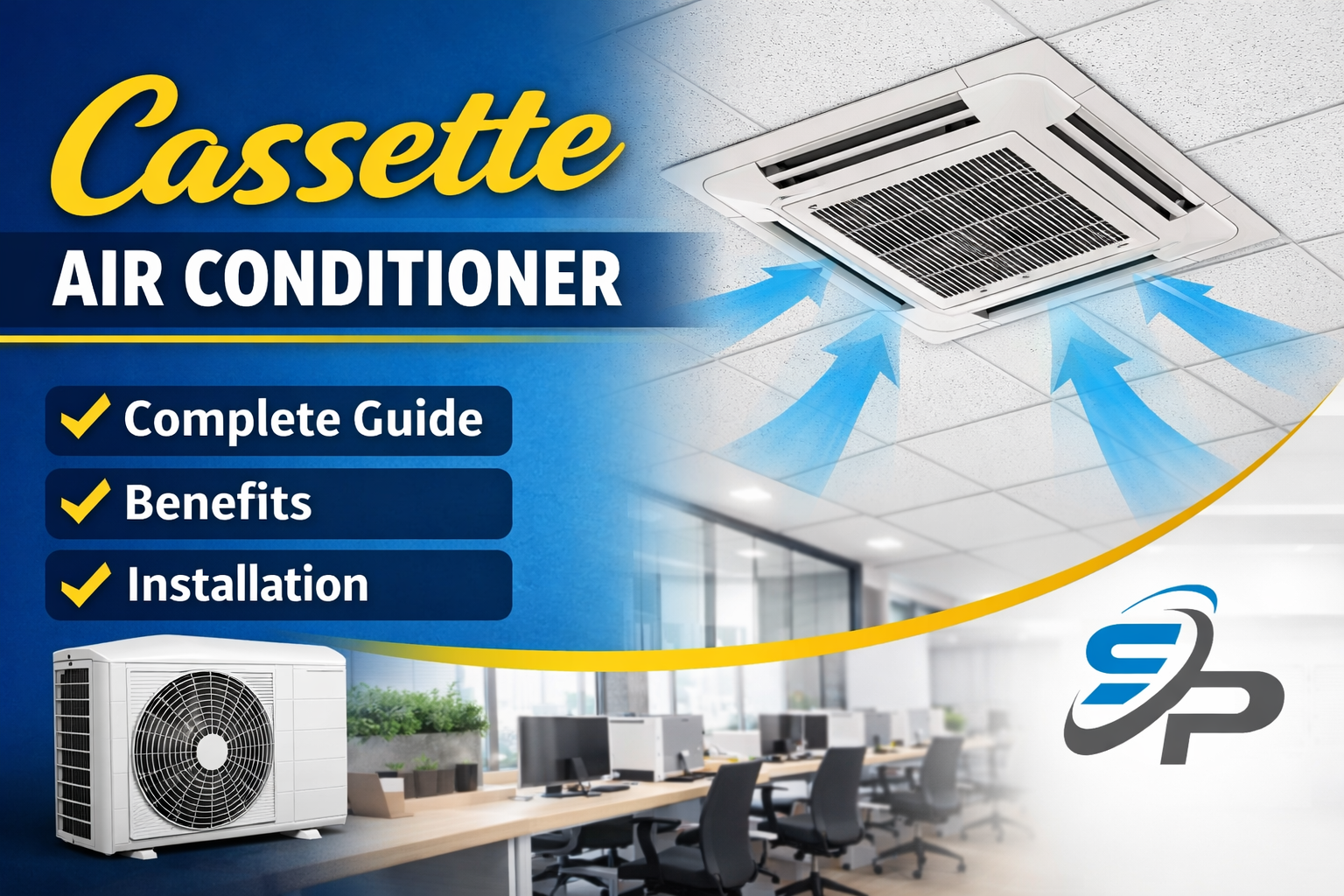
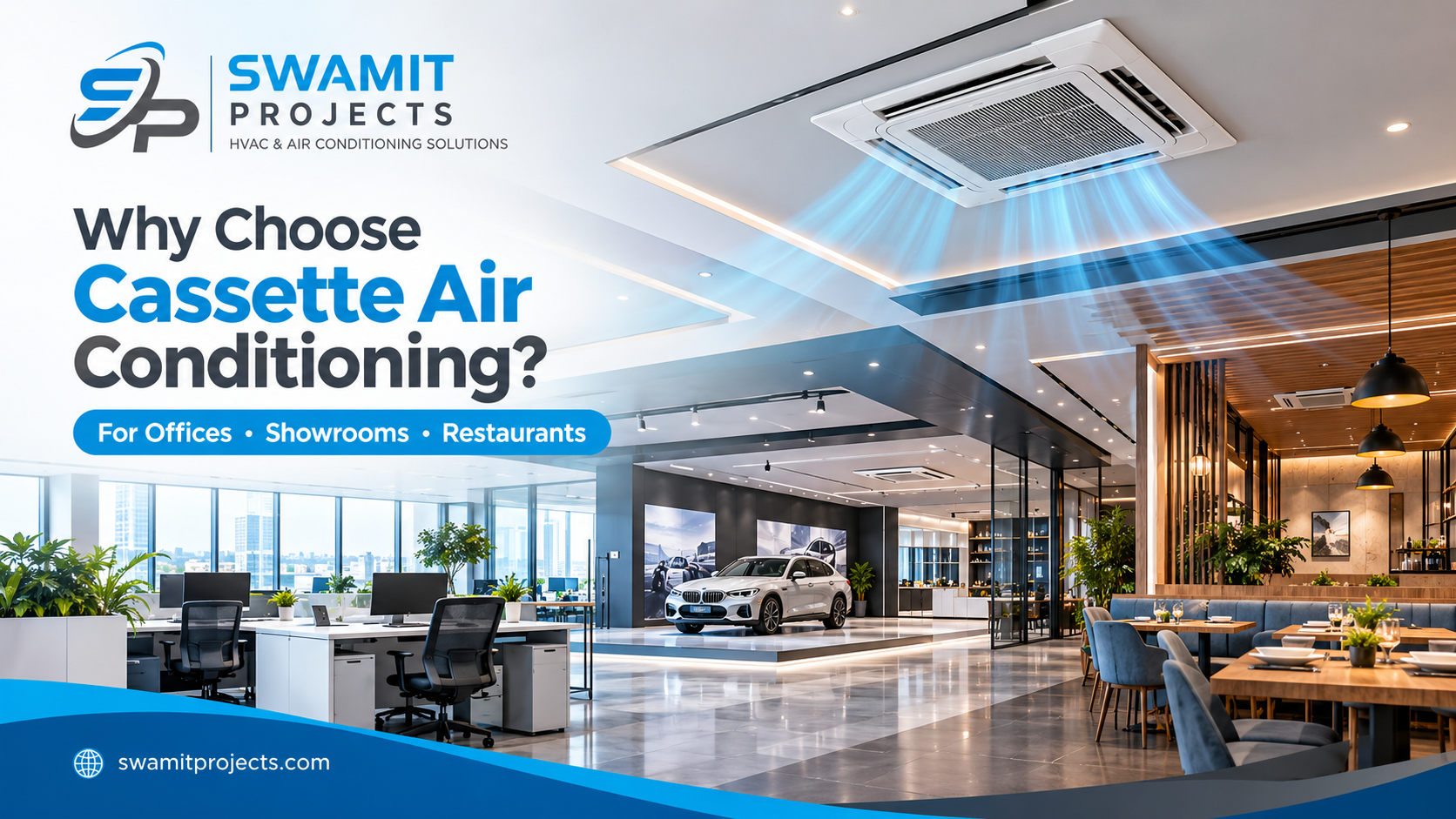
A standard split AC setup places an indoor high-wall unit inside the room connected to an outdoor compressor via copper piping. In recent years, commercial split variants also include ceiling cassettes and compact ductable splits.
The Upside
Lower Upfront Capital: If you are launching a startup or moving into a small leased floor on a tight launch budget, individual split units have a significantly lower starting cost.
Independent Room Control: Every cabin, server room, and meeting booth gets its own remote. If the sales team is out on field visits, you simply switch off the units in their zone without wasting energy.
Zero Ductwork Clutter: Installation is straightforward and doesn’t require dropping ceiling levels for sheet-metal supply and return ducts.
The Downside
Outdoor Unit Clutter: If you have an open floor plan needing 15 to 20 tons of cooling, installing 10 separate split units means mounting 10 bulky outdoor compressors on balconies, ledges, or exterior walls. It quickly turns into an architectural eyesore and a servicing headache.
Poor Air Circulation in Large Bays: Wall-mounted splits throw air in one direction. You end up with "freeze zones" directly beneath the louvers and stuffy dead spots in the corners.
No Fresh Air Exchange: Standard split units only recirculate indoor air. In packed meeting rooms, carbon dioxide levels rise by the afternoon, causing the midday sluggishness many teams mistake for just needing another coffee.
2. How Centralized HVAC Systems Perform in Modern Workspaces
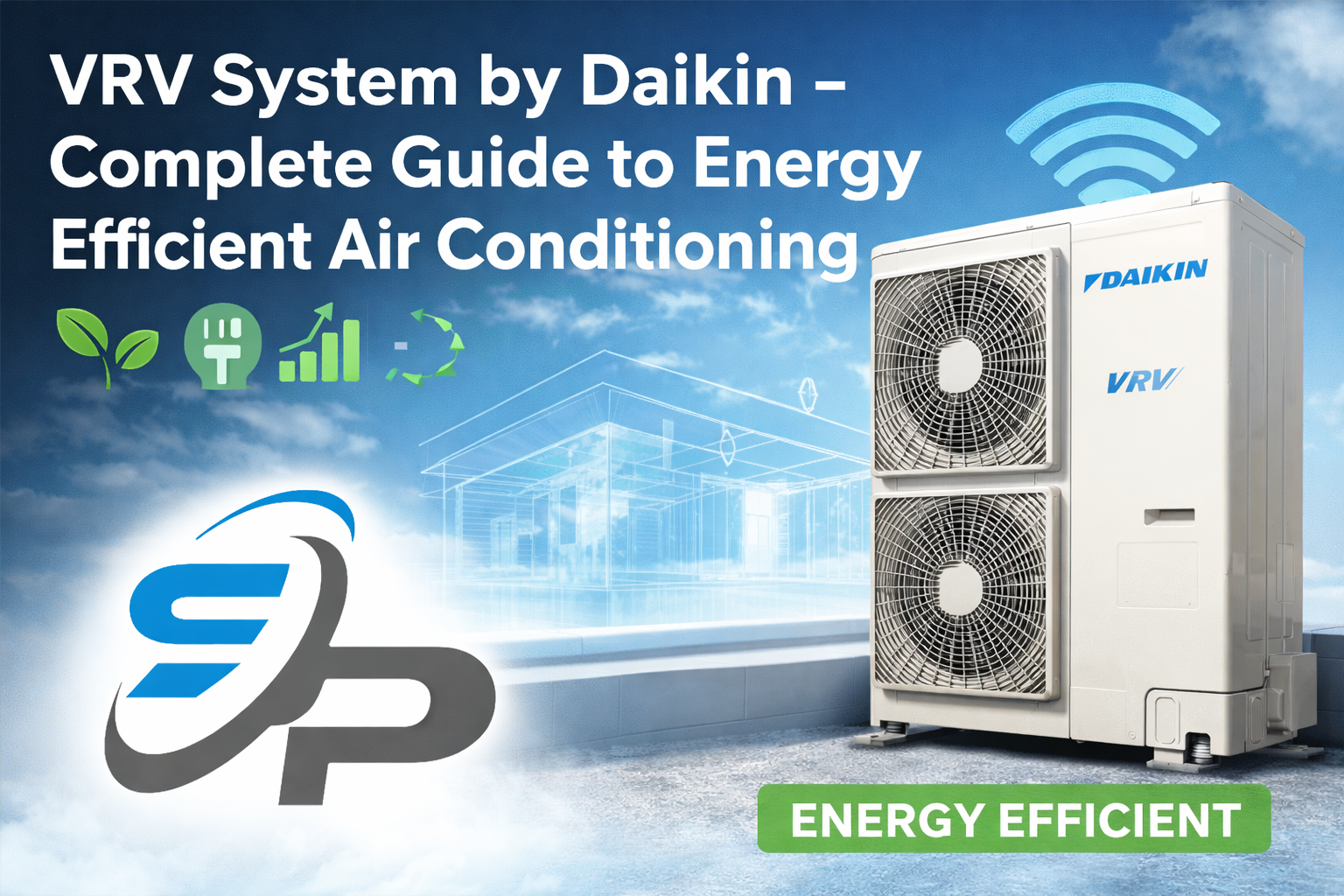
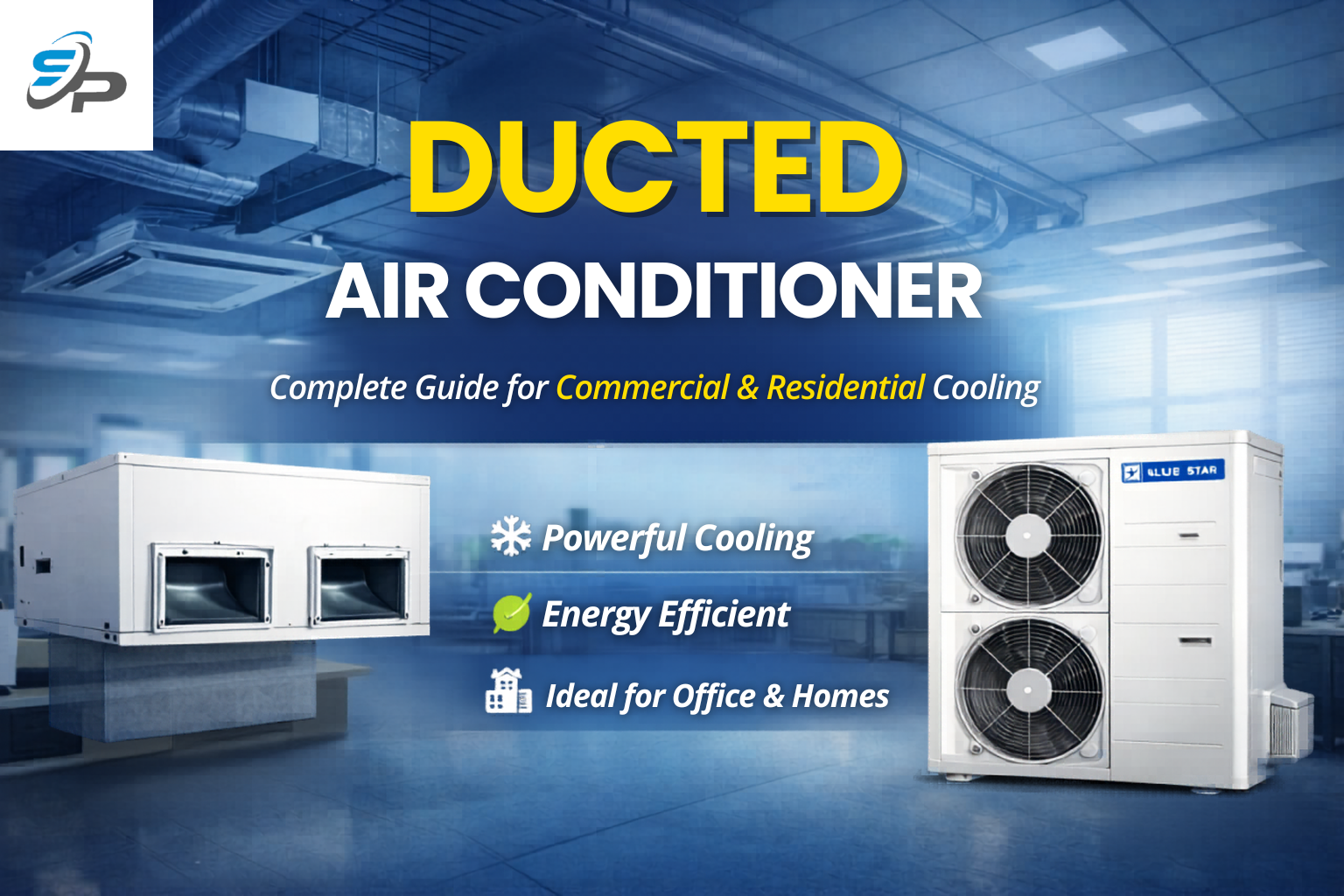
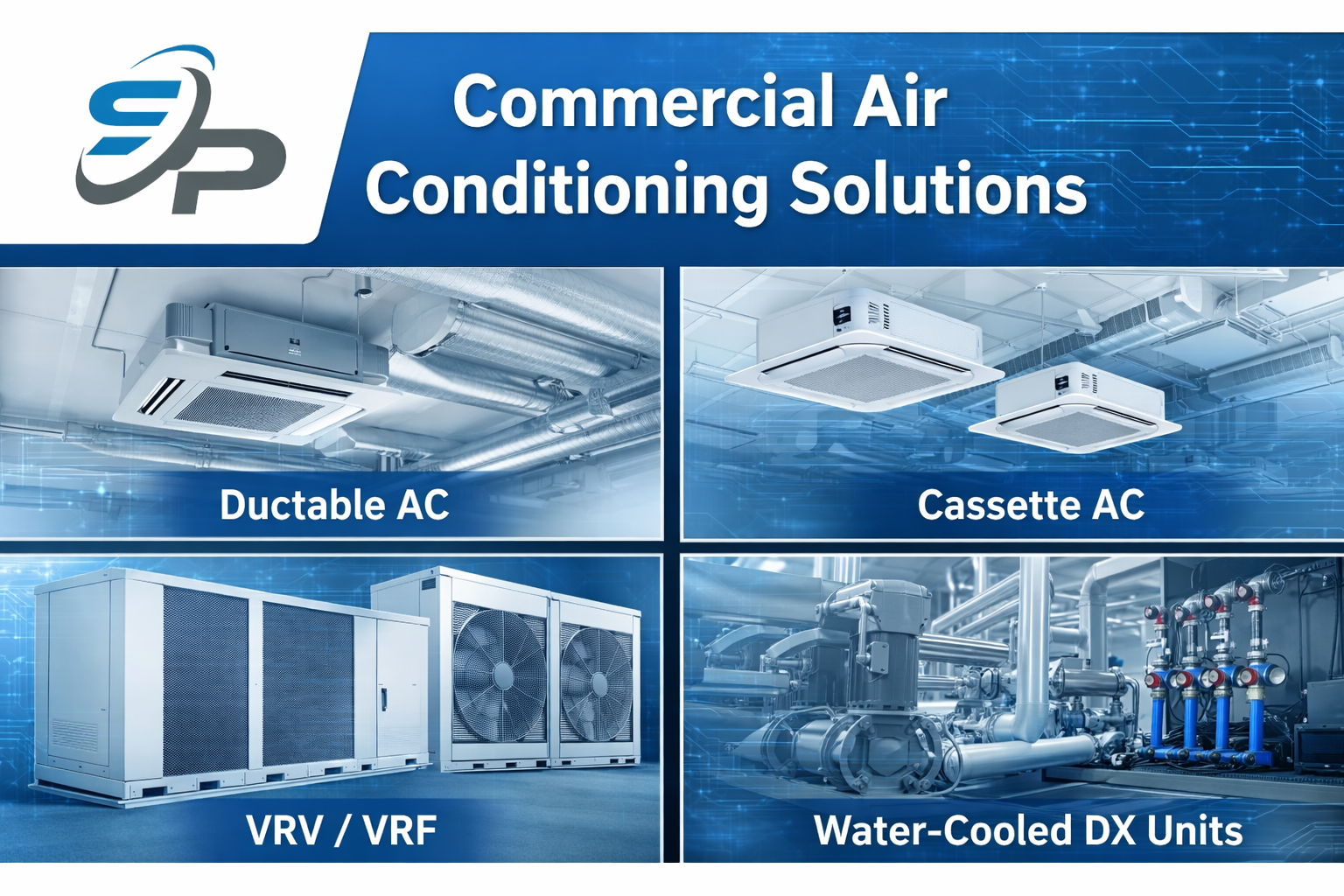
Centralized cooling covers everything from ducted packaged units and chiller plants to modern VRV / VRF (Variable Refrigerant Volume/Flow) setups. In commercial buildings, VRF systems paired with ceiling cassettes or concealed ducted units have largely become the modern standard.
The Upside
Superior Energy Efficiency at Scale: Centralized VRF systems run inverter-driven compressors that ramp up or down dynamically depending on load. Instead of turning on and off at full blast, they sip electricity according to exact demand, delivering massive savings on commercial utility bills.
Clean, Architectural Aesthetics: All mechanical components hide above the false ceiling. Air delivers smoothly through sleek linear slot diffusers or flush ceiling cassettes, leaving walls clean for branding, whiteboards, and large windows.
Integrated Ventilation (IAQ): Centralized systems integrate with Treated Fresh Air (TFA) units and Heat Recovery Wheels (HRVs). They filter out PM2.5 pollutants, vent stale air, and supply fresh oxygen across the floor.
Central Building Management: Facility teams can monitor setpoints, schedule run hours, and detect faults across multiple floors from a single dashboard.
The Downside
Higher Upfront Investment: Equipment, duct design, insulation, and piping carry a higher initial ticket price.
Detailed Engineering Required: You cannot simply eyeball tonnages. Central cooling requires calculated heat-load assessments, CFM airflow balancing, and professional duct layout planning before installation starts.
Quick Comparison: At a Glance
| Feature | Split ACs | Centralized / VRF Systems |
| Best For | Small offices (< 1,500 sq. ft.), modular cabins, retail shops | Mid-to-large corporate floors, IT setups, multi-zone offices |
| Upfront Cost | Low to moderate | Moderate to high |
| Running Cost (Power) | High per ton in large spaces | 30% to 50% lower operational power use |
| Aesthetics | Wall-hung boxes and visible wiring | Completely concealed or flush architectural grilles |
| Outdoor Footprint | One outdoor unit per indoor unit | Single or grouped outdoor units on the terrace |
| Air Quality & Fresh Air | Recirculates indoor air only | Centralized filtration and fresh air integration |
| Lifespan | 6–8 years under heavy commercial run | 12–15+ years with scheduled maintenance |
The Verdict: Which One Fits Your Workspace?
Choose Split or Cassette Units if: Your office is under 1,500 to 2,000 sq. ft., your lease is short-term, or you have widely varying working shifts where only one small room operates late into the night.
Choose Centralized / VRF Systems if: You operate an open-plan office, an entire floor plate, or a multi-room facility where uniform cooling, low acoustic noise, sleek aesthetics, and power savings matter over a 5 to 10-year horizon.
Final Thoughts: Look Beyond the Initial Quote
When fitting out an office, it’s tempting to look at the purchase price of split ACs and call it a day. It feels safe, familiar, and cheaper on day one.
The catch with HVAC, though, is that the purchase price is only a fraction of what that system will cost you over the next five to ten years. Commercial spaces run 10 to 14 hours a day, five to six days a week. At that scale:
In a small clinic, boutique agency, or rented floor under 1,500 sq. ft., split units (especially ceiling cassettes) make practical sense. You save on upfront capex, avoid tearing into false ceilings, and gain room-by-room control without overcomplicating things.
In any collaborative workspace, open floor plan, or multi-cabin corporate setup, centralized cooling (specifically VRV/VRF) quickly pays back its initial premium through slashed power bills, silent operation, and better air exchange that prevents the dreaded 3 PM office slump.