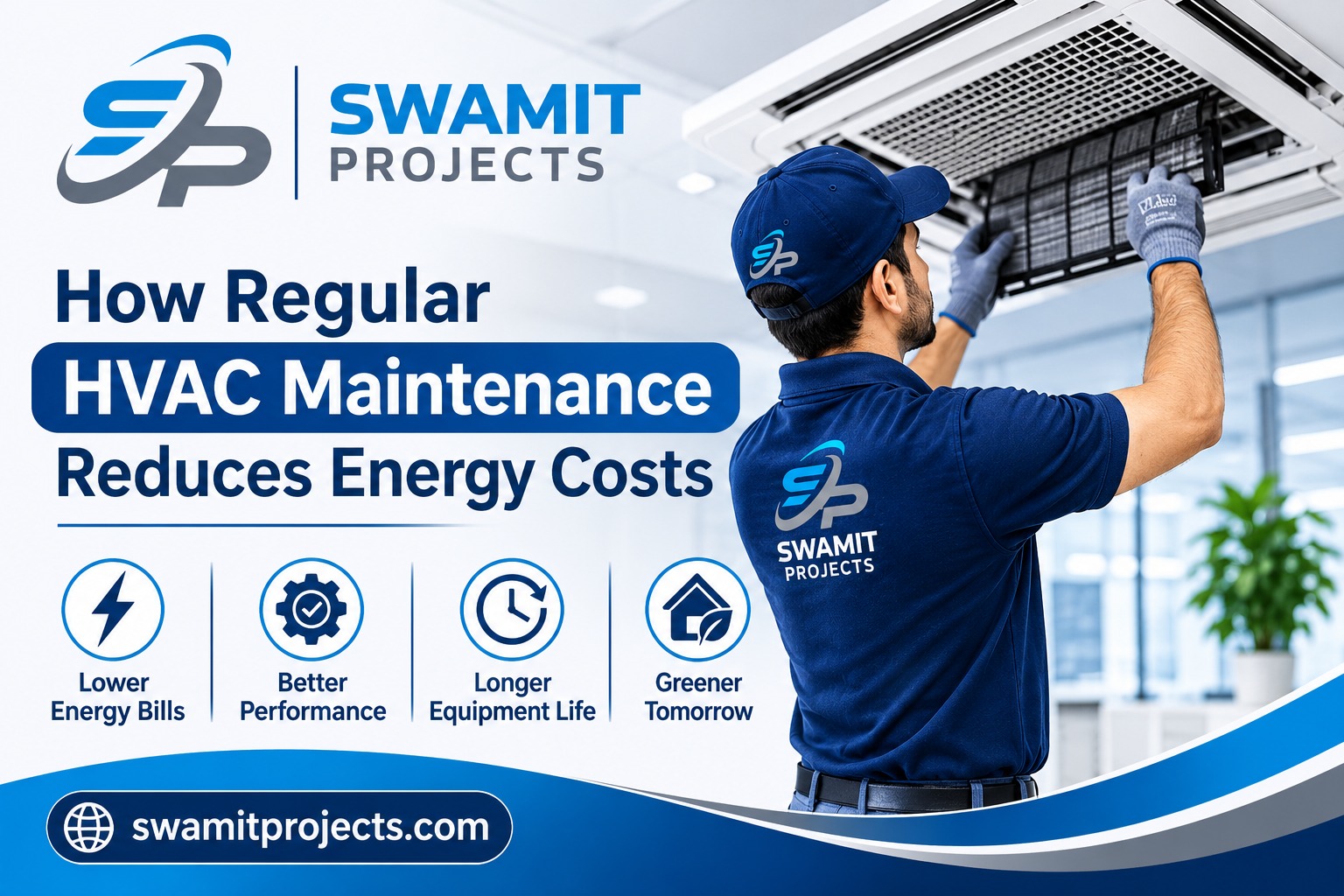
How Regular HVAC Maintenance Reduces Energy Costs
In commercial buildings, offices, hotels, hospitals and industrial facilities, HVAC systems play an important role in maintaining a comfortable indoor environment. However, keeping these systems running throughout the day can consume a significant amount of electricity. Many businesses focus on upgrading their air conditioning equipment to reduce energy bills, but often overlook one simple solution: regular HVAC maintenance.
A properly maintained HVAC system not only performs better but also consumes less energy, reduces unexpected breakdowns and increases equipment life. For businesses looking to manage their operational expenses, investing in regular HVAC maintenance can make a noticeable difference.
At Swamit Projects, we understand how important an efficient heating, ventilation and air conditioning system is for commercial and industrial spaces.
Why Does HVAC Maintenance Matter?
Over time, dust, dirt and other particles collect inside HVAC equipment. Air filters become clogged, cooling coils get dirty, and components may start wearing out due to continuous operation.
When this happens, the system has to work harder to maintain the required temperature. As a result, it consumes more electricity and may struggle to deliver proper cooling or ventilation.
Regular HVAC maintenance helps identify these problems before they become expensive repairs. It keeps the equipment clean, improves airflow and ensures that all major components are working properly.
7 Ways Regular HVAC Maintenance Helps Reduce Energy Costs
1. Clean Air Filters Improve Airflow
Air filters collect dust and airborne particles during daily operation. When filters become dirty, airflow gets restricted, forcing the HVAC system to work harder.
Cleaning or replacing air filters at regular intervals allows air to circulate properly. This reduces unnecessary pressure on the equipment and helps maintain efficient cooling.
2. Clean Cooling Coils Improve System Efficiency
Evaporator and condenser coils are essential parts of an air conditioning system. When dirt builds up on these coils, heat transfer becomes less effective.
As a result, the system may run for longer periods to achieve the desired temperature. Professional coil cleaning helps improve heat exchange and supports better energy efficiency.
3. Proper Refrigerant Levels Prevent Energy Waste
Refrigerant plays an important role in the cooling process. Incorrect refrigerant levels caused by leakage or other system issues can affect cooling performance.
The compressor may have to work harder, increasing electricity consumption. Regular inspections help identify refrigerant-related problems and ensure the system operates within manufacturer-recommended specifications.
4. Well-Maintained Motors and Fans Consume Less Energy
Motors, fans and belts are responsible for moving air throughout a building. Loose belts, worn bearings or poorly maintained motors can reduce system performance.
During routine HVAC servicing, technicians inspect these components, make necessary adjustments and identify signs of wear. This helps maintain smooth operation and prevents avoidable energy loss.
5. Thermostat Calibration Prevents Unnecessary Cooling
Sometimes, an HVAC system consumes more electricity simply because the thermostat is not reading the temperature correctly.
A properly calibrated thermostat helps maintain the desired indoor temperature without unnecessary cooling cycles. For commercial buildings, using suitable temperature settings and scheduling can further improve energy management.
6. Early Problem Detection Avoids Expensive Repairs
Small HVAC problems can become major issues when ignored. Unusual noises, vibration, reduced cooling and frequent system cycling may indicate underlying faults.
Regular maintenance allows technicians to identify these warning signs early. Fixing minor issues on time can prevent costly equipment damage and reduce the risk of unexpected downtime.
7. Regular Maintenance Extends Equipment Life
An HVAC system is a major investment for any commercial or industrial property. When equipment is maintained properly, its components experience less unnecessary stress.
This helps extend the working life of the system and delays the need for expensive replacements. It also allows businesses to get better long-term value from their HVAC investment.
How Often Should Commercial HVAC Systems Be Maintained?
The maintenance schedule depends on the type of HVAC equipment, operating hours, building size and surrounding environment.
For most commercial facilities, routine inspections should be planned throughout the year. Buildings with heavy usage, such as hospitals, hotels, factories and shopping centres, may require more frequent maintenance.
A professional HVAC maintenance plan generally includes:
Cleaning or replacing air filters.
Inspecting evaporator and condenser coils.
Checking refrigerant levels and possible leaks.
Inspecting electrical connections and motors.
Checking belts, fans and blowers.
Inspecting drainage and condensate systems.
Checking thermostat operation and system performance.
Following a planned maintenance schedule helps businesses maintain consistent cooling performance and avoid unnecessary energy consumption.
Why Choose Swamit Projects for HVAC Solutions?
Managing a commercial or industrial HVAC system requires proper technical knowledge, regular inspections and reliable support. Whether it is an office, hotel, hospital or industrial facility, an efficient HVAC system is essential for smooth daily operations.
Swamit Projects provides commercial and industrial air conditioning and HVAC solutions across Delhi NCR. We focus on delivering reliable HVAC services that support better system performance, operational efficiency and long-term equipment reliability.
Our approach is centred on understanding each project's requirements and providing suitable HVAC solutions.
Final Thoughts
High electricity bills are not always the result of outdated HVAC equipment. Sometimes, poor maintenance is the main reason behind unnecessary energy consumption.
Regular HVAC maintenance keeps air filters clean, improves airflow, supports efficient cooling and helps identify problems before they become serious. For businesses, this means better system performance, fewer unexpected repairs and improved control over operating costs.
If you want to improve your building's cooling efficiency and manage HVAC operating expenses, Swamit Projects can help you find the right commercial and industrial HVAC solutions in Delhi NCR.
Contact Swamit Projects today to discuss your HVAC requirements.